
A Garden for People and Birds
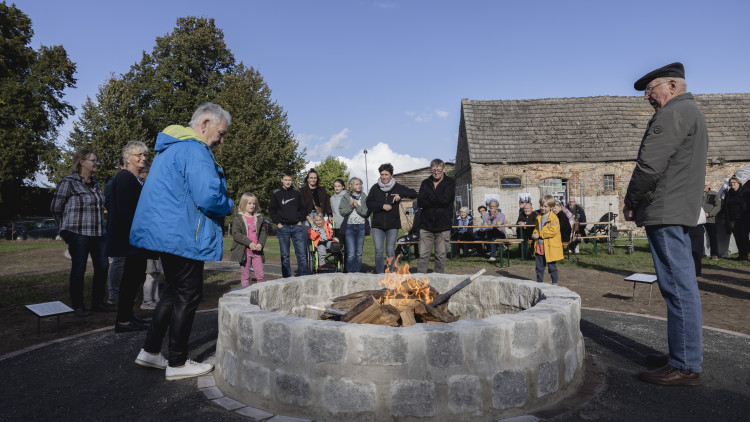
The artwork resulting from the Agriculture Aftermath Living Lab
A Garden for People and Birds, an artistic project by Berlin-based artist Antje Majewski, mediated by Susanne Burmester, emerged in Wietstock, a small village in Mecklenburg-Western Pomerania, northeastern Germany. The project forms part of Agriculture Aftermath, within the European initiative Art Living Lab to Repair the Land(ALILAND), and addresses the social and environmental consequences of intensive agricultural production, while exploring how a community can imagine new ways of living together with the natural world.
The project's origins date back to 2017, when a growing group of Wietstock residents began reflecting on what held their community together and how they could shape its future. Through the New Patrons (Neue Auftraggeber) model, residents became commissioners of an artistic project by Antje Majewski, initially conceived around three elements: a mosaic, a village garden and a pavilion. The idea of the garden was later taken up by a second group of residents within ALILAND. Together with mediator Susanne Burmester, they began discussing how a communal garden could strengthen social bonds while responding to the environmental challenges affecting the region, particularly increasingly dry summers and falling groundwater levels.
These concerns are closely connected to Wietstock's agricultural history. Before German reunification in 1990, almost all the village's inhabitants worked in the local LPG (agricultural production cooperative), which operated a large-scale pig-breeding facility. The transition to a market economy transformed this structure into a business employing only a handful of people. Many residents lost their jobs or left the village, profoundly changing its social fabric. Today, the consequences of this transformation remain visible, while industrial agriculture continues to shape the surrounding landscape. Against this background, the garden became an opportunity to reflect on the relationship between agricultural production, the land and community life, while creating a shared space for new forms of cooperation and ecological awareness.
The resulting work, A Garden for People and Birds, proposes a communal garden designed to accommodate both human activities and the needs of other living beings. Rather than treating nature as a backdrop for social life, the project seeks to make visible the connections between people, plants and animals, giving non-human inhabitants their own place within the garden. Its design responds to the region's increasingly dry climate through a planting strategy based on drought-resistant native trees, shrubs and perennials. Instead of relying on a technically demanding irrigation system or a new well, the garden uses layers of vegetation to create shade, retain moisture in the soil and establish a more favourable microclimate.
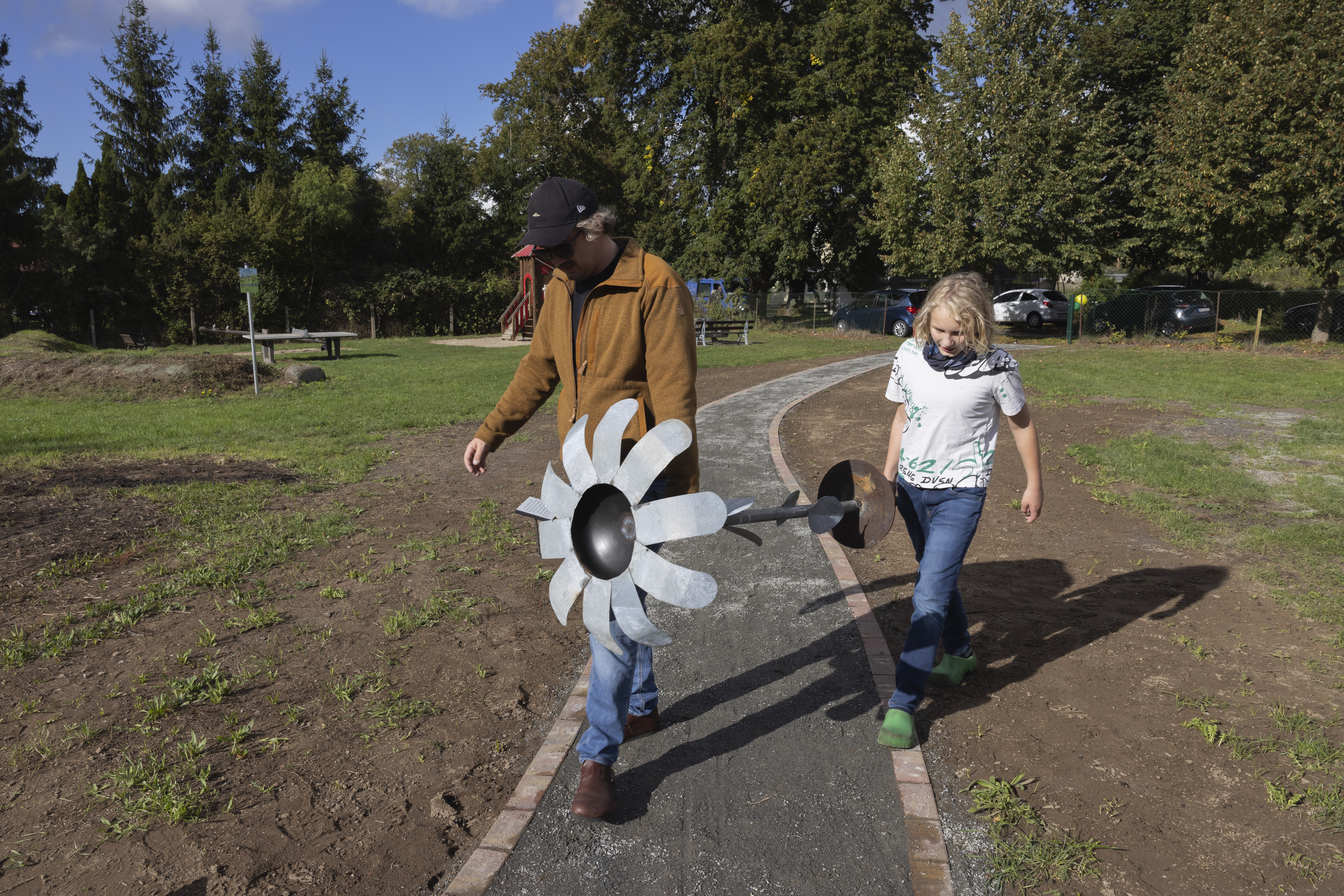
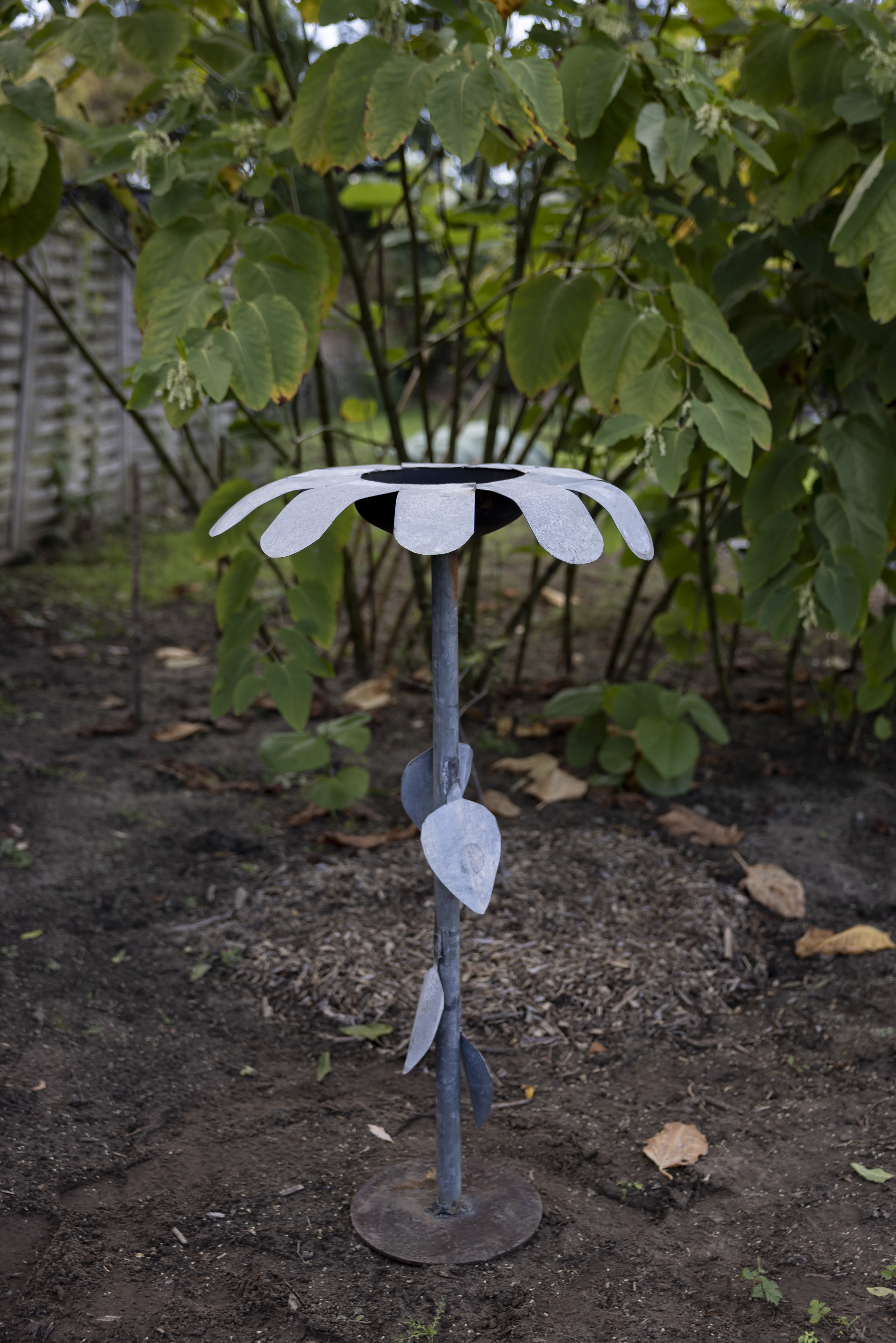
The garden is organised into different areas that bring together ecological and social functions. An orchard of old local apple varieties grows within a wildflower meadow, providing food for people and insects. An open lawn offers space for games and outdoor activities, while a fire pit surrounded by benches creates a place for gatherings and shared meals. A dedicated area for birds includes denser vegetation, trees and shrubs that provide shelter and food, as well as a metal birdbath shaped like a sunflower, created in collaboration with a local blacksmith. A trail of eleven text panels runs through the garden, bringing together the gardening knowledge of the participants. Based on conversations with Majewski, these texts explore everyday experiences of living alongside plants and animals, addressing topics such as drought, composting, cultivation and the decisions involved in caring for a garden.
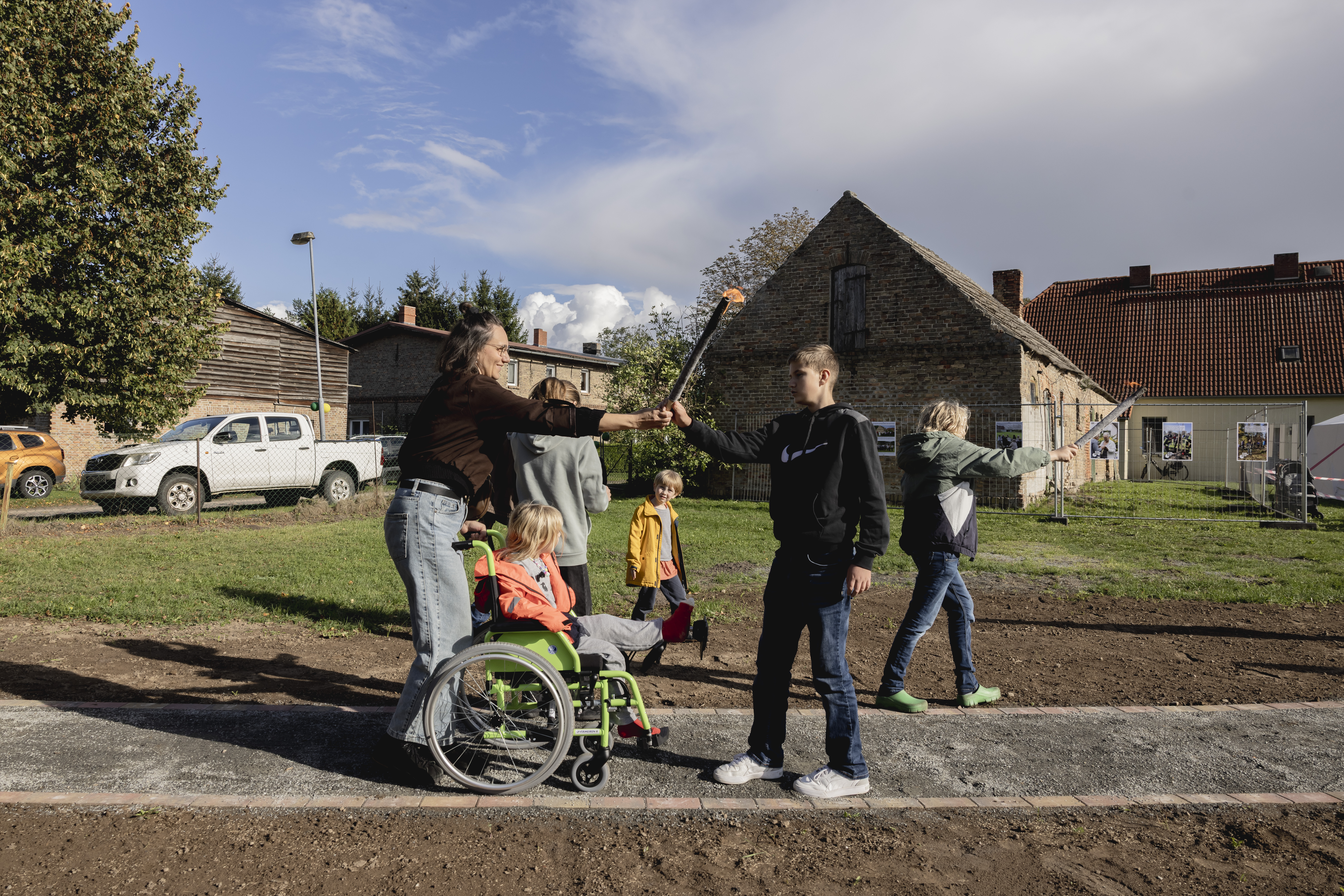
The creation of the work was itself a collective process. Residents cleared an abandoned municipal plot of accumulated waste and rubble, prepared the ground and organised the planting with the support of local farms, the volunteer fire brigade and other villagers. The group also contributed its practical knowledge to the selection of plants, prioritising species that were already familiar from their own gardens, could withstand dry conditions and required relatively little maintenance. This knowledge became an integral part of the artwork, transforming individual gardening experience into a shared resource. As one of the participants, gardener and commissioner Sieglinde Priem, explained, even a plant considered unattractive deserves to remain if insects depend on it.
The garden thus becomes more than a landscaped public space: it is an evolving artwork and a place where ecological knowledge, social relationships and collective responsibility can grow together. Through the shared care of the garden, A Garden for People and Birds creates an opportunity to reconsider Wietstock's agricultural past while responding to present-day challenges such as climate change, biodiversity loss and the social fragmentation of rural communities. The project continues to develop through further contributions from residents, including plants brought from private gardens, while two additional elements of the original commission—a playful path based on an apple motif and a pavilion equipped with solar panels—extend its vision of a shared space for community life.