
What is missing
Reflections on Storytelling After the Inauguration of Cuévana
Here you can read the Spanish version
Constructing a narrative usually means negating another. In this way, identities are created in which, by definition, someone is left outside the frame.
Walking through Barruelo de Santullán with the commissioners (and I use the feminine form because, after more than a year and a half of working in the area, it is the women who have taken the reins of this group), the identity that has been deliberately imprinted on the town over the years becomes evident: the life, suffering, labour and death of the miner.
The myth of the Male Miner (with a capital M, as in Hero) dominates every corner of this town and practically every place where male labour transformed the landscape in the name of progress during the nineteenth and twentieth centuries. Yet outside this narrative lie stories led by women. These stories are not only about sustaining and caring for those who carried out this work; they also tell us about the women themselves and their ways of inhabiting the world, shaped by their political positions, their pleasures and their own work.
The wound—the aftermath—that these women feel must be repaired in Barruelo de Santullán has to do with this absence. With this void, in which women's images and words continue to be denied their place as a fundamental part of history and of the contemporary construction of the area. For them, repairing the land does not simply mean restoring nature, as was done with the spoil heap at the entrance to the town, thereby stitching up, without anaesthetic, the damage inflicted over decades by the company that exploited the land and by the institutions. For this group, repairing the land also means, among other things, taking their neighbours into account and listening to them, thus beginning to focus attention on these women and on the territory they know, care for and enjoy. On the place that is everyone's home.
Almost from the moment we began Energy Aftermaths (Secuelas energéticas), we have been haunted by a phrase uttered by Geles, one of the commissioners, during a mediation session: “More than half the town is built on the mine's waste.” These words gave rise to a series of activities that, in one way or another, linked the construction of the town on mining waste to how these women felt about sustaining certain narratives while, at the same time, being dismissed as waste themselves—as though they were less important agents than others in Barruelo de Santullán.
When the commissioners invited TxP (Jo Muñoz and Diego Peris) to work as artists and give form to their desires, problems and concerns, we placed two things on the table: what is missing (as Jorge Oteiza put it, human beings are defined by what they lack) and the spoil heap itself. Neither was understood as a complaint, but rather as a demand for recognition.
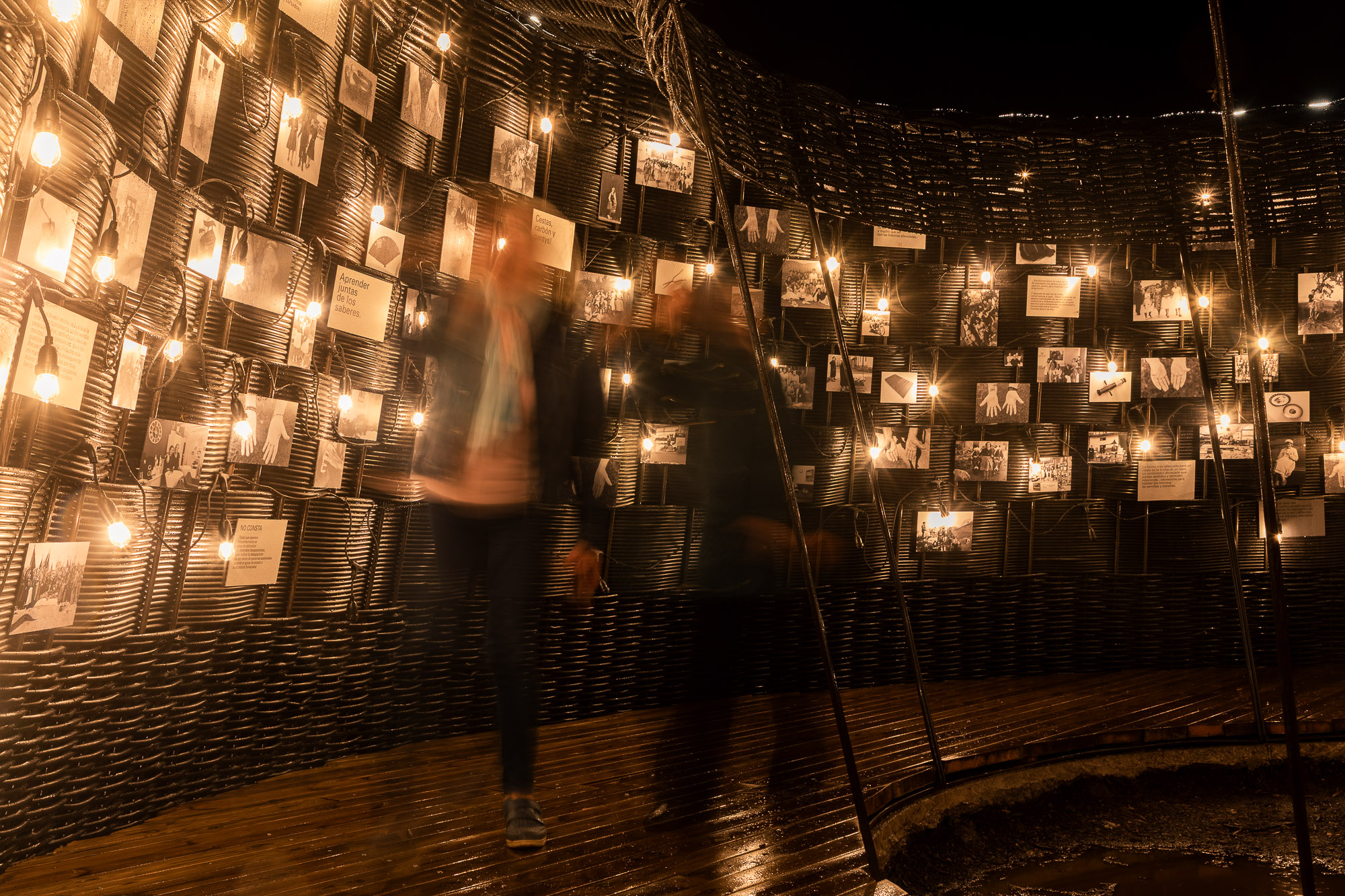
With these ideas in mind, Todo por la Praxis began working through a process of deep listening, not only with the commissioners but also with the other women from the town who wished to take part in this phase. The artists' aim was to give a voice to those who had been denied one, starting from the spoil heap, so that they could become visible and be heard. And from that point, continue building community and history.
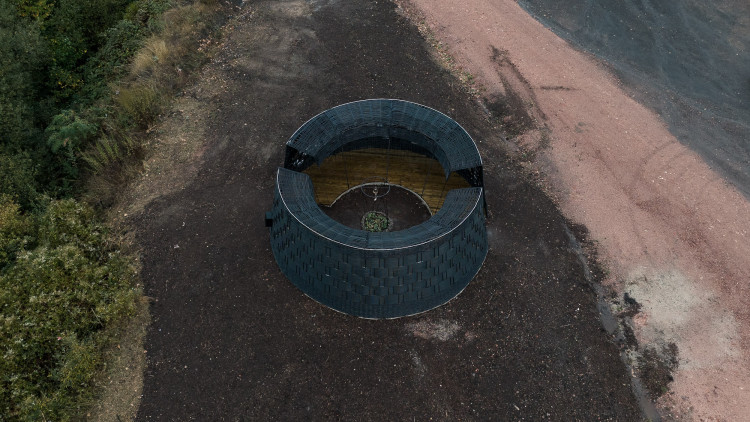
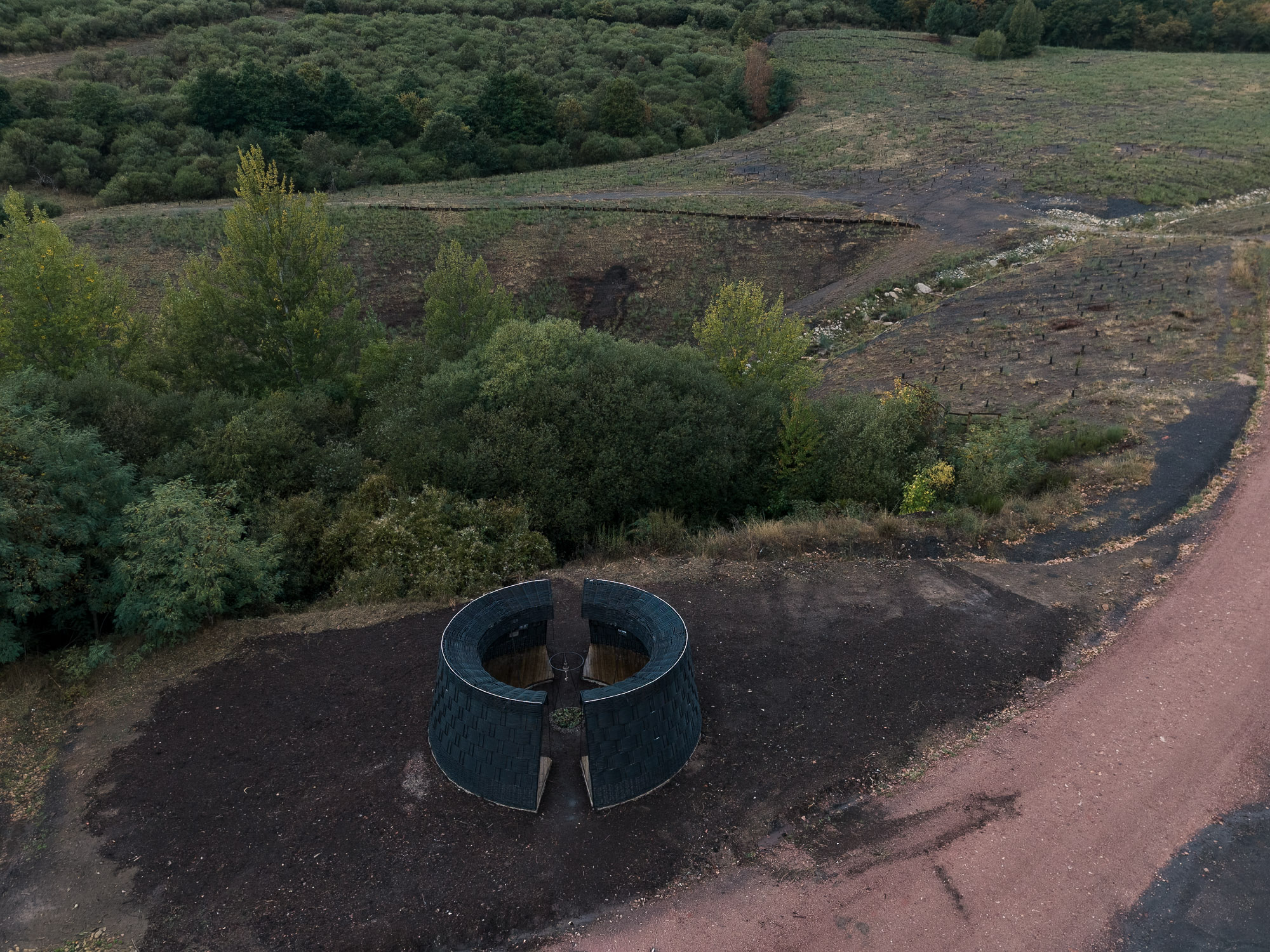
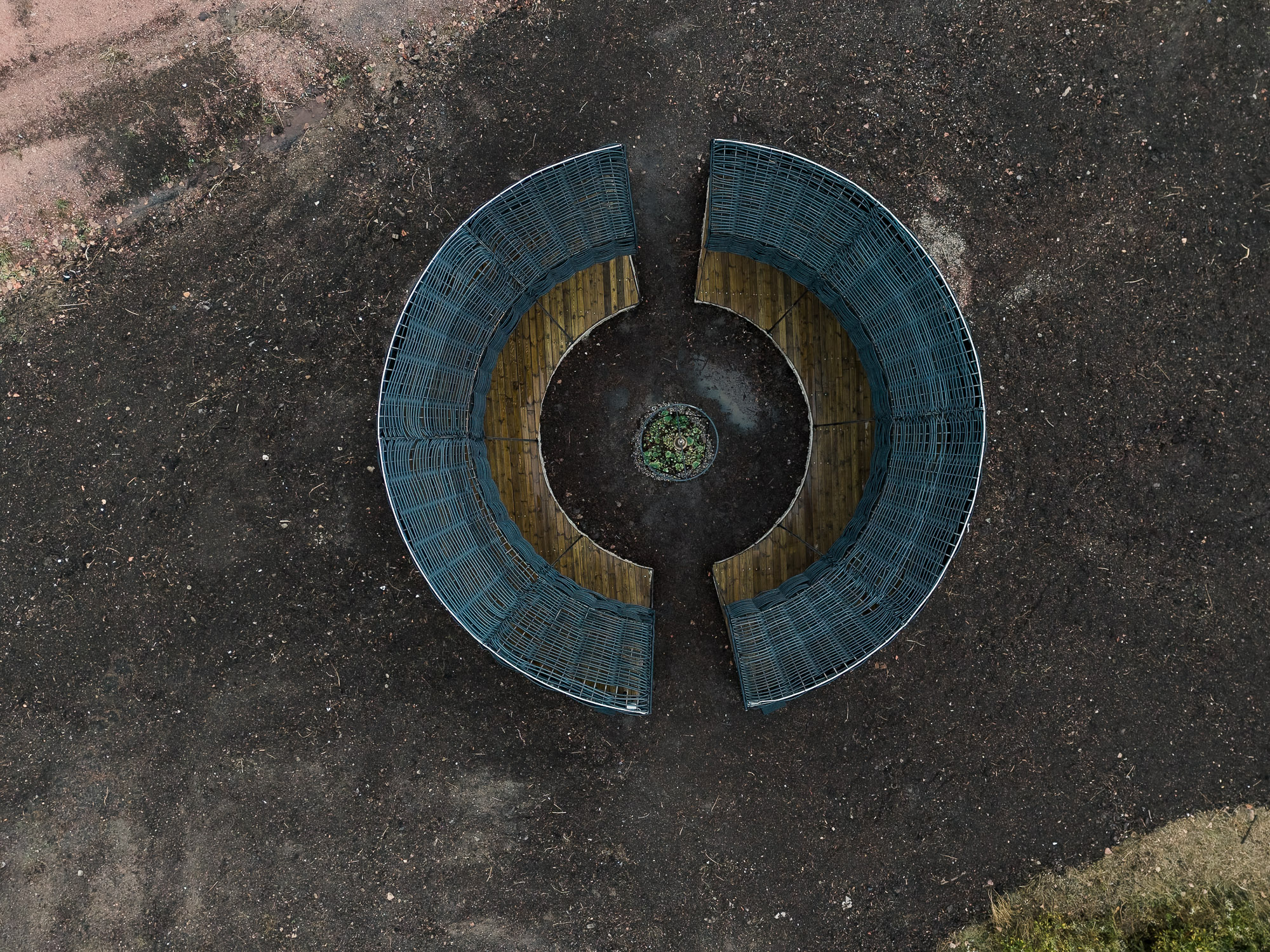
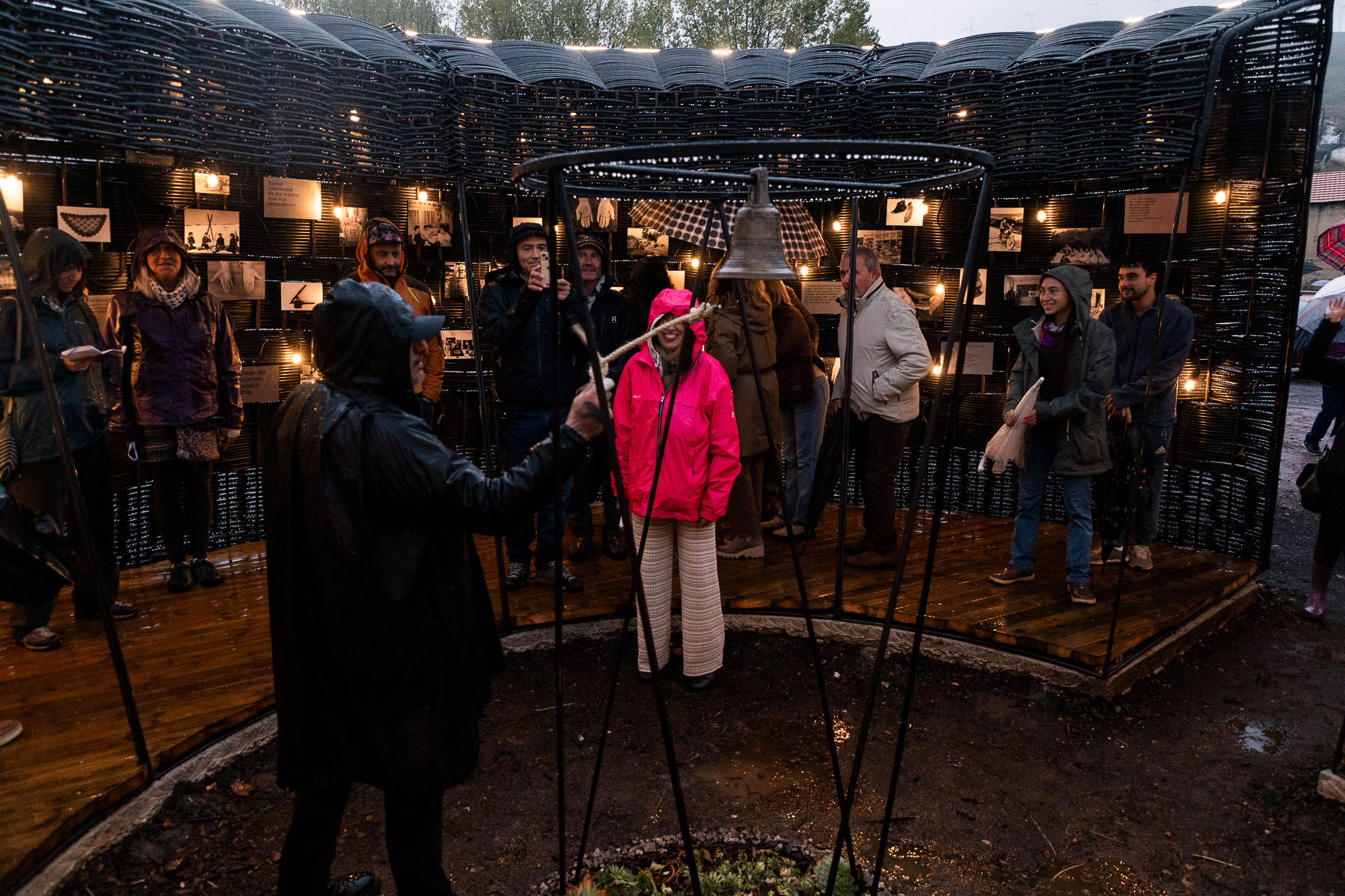
To do so, we had to keep coming together. Thus, from two weeks before the inauguration, we gathered at the spoil heap to continue asserting the importance of this narrative. We did so by weaving conversations within the space created by Todo por la Praxis. It is a space that the artists, the commissioners, the mediator and many local residents have been building and weaving together, and one that recalls the cuévanos: the baskets women used years ago to collect waste coal from the very same spoil heap where the artwork now stands.
On the day of the inauguration, Jo Muñoz and Diego Peris (TxP) recalled Ursula K. Le Guin's book The Carrier Bag Theory of Fiction. Thinking about this reference, I believe that the work they have created, Cuévana, embodies a narrative of the kind proposed by Le Guin: a bag that gathers stories capable of repairing not only the narratives denied to women, but also any of the narratives imposed on these territories, from which life has been extracted and nothing more.
The day before the inauguration, already nervous about the public exposure these events entail, Paula (another of the commissioners) sent us a message: “It's as if the spoil heaps had risen up again.” And that is precisely what happened, both visually, since the work created by TxP recalls, in a way, one of the mounds that once stood on the spoil heap before its ecological restoration, and metaphorically, because the women who took part have risen above the narratives of abandonment and catastrophe imposed on them by contemporary society.
The inauguration took place on 3 October, and a torrential downpour accompanied us as we walked towards Cuévana. Already soaked to the bone, we were then drenched in affection, emotion, smiles, words, and the wisdom and strength radiating from this group of commissioners.
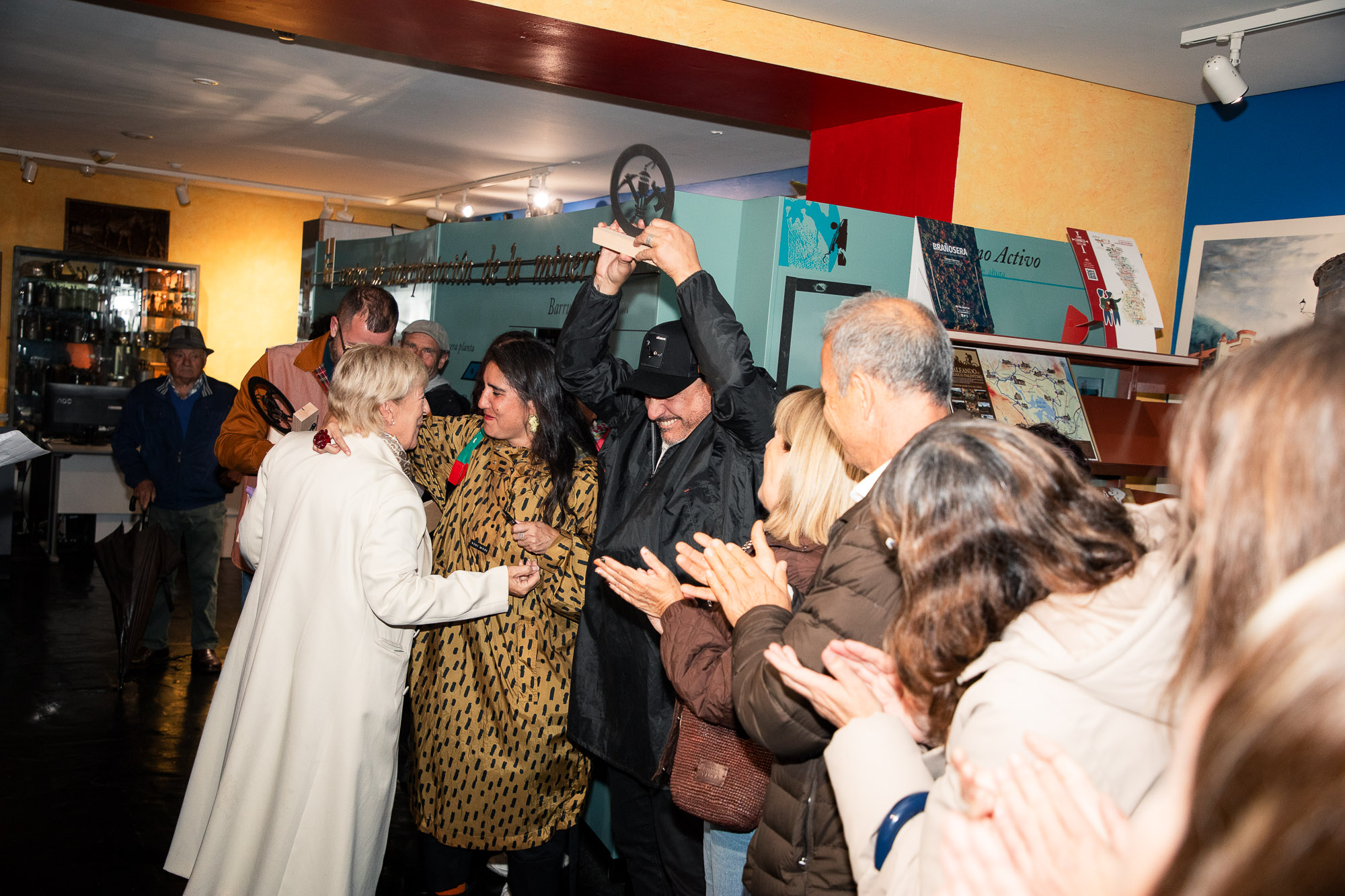
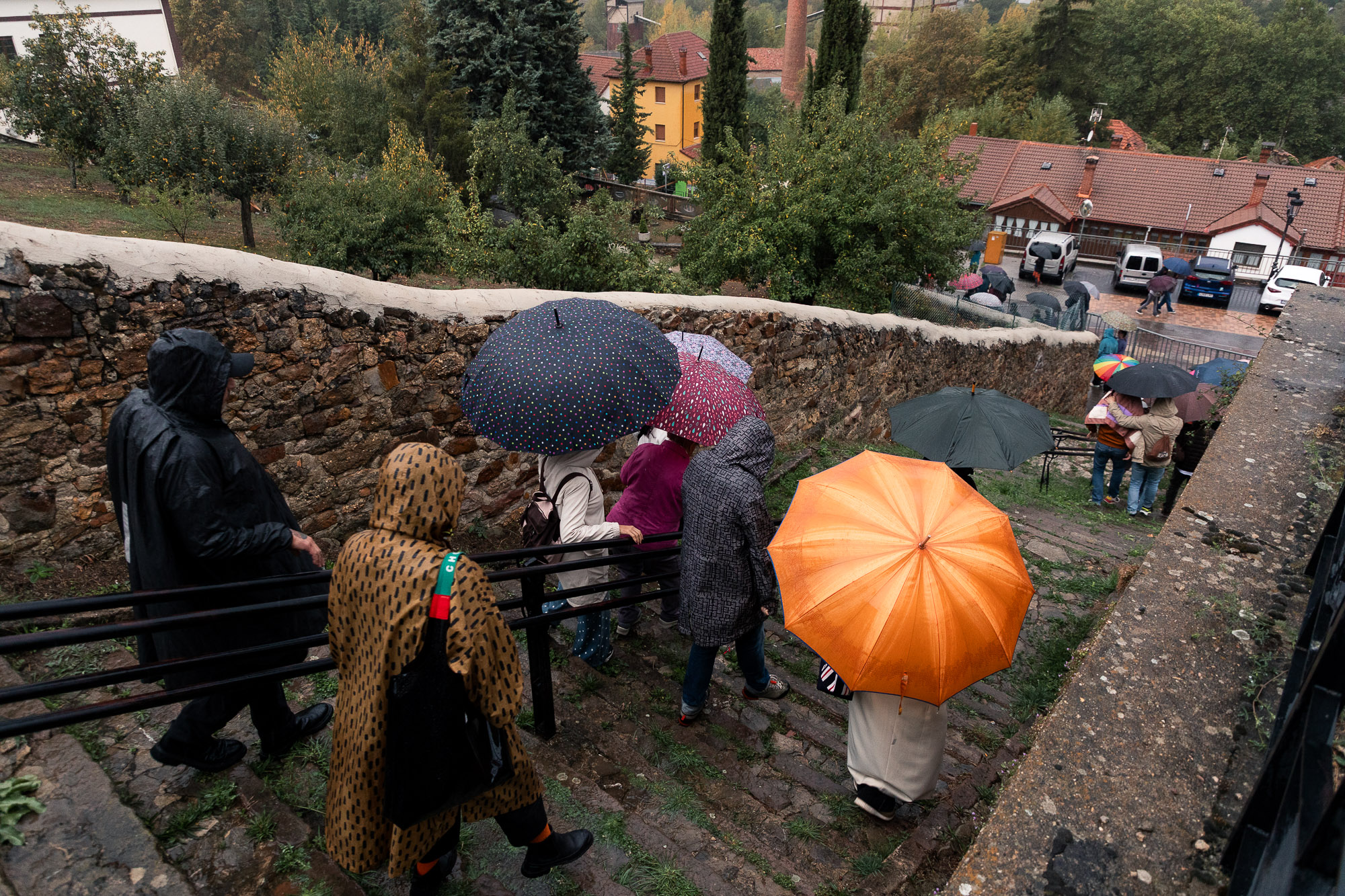
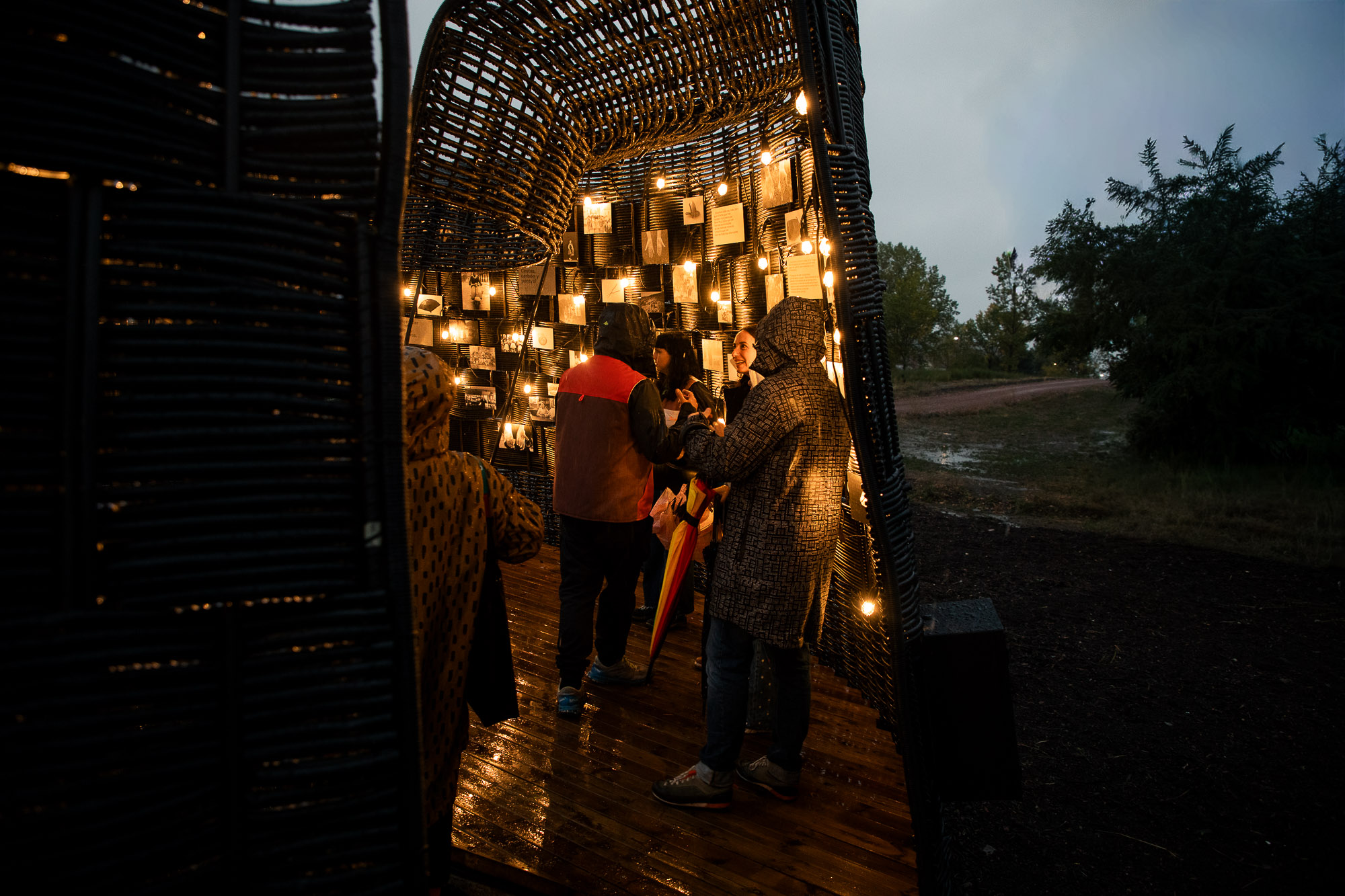
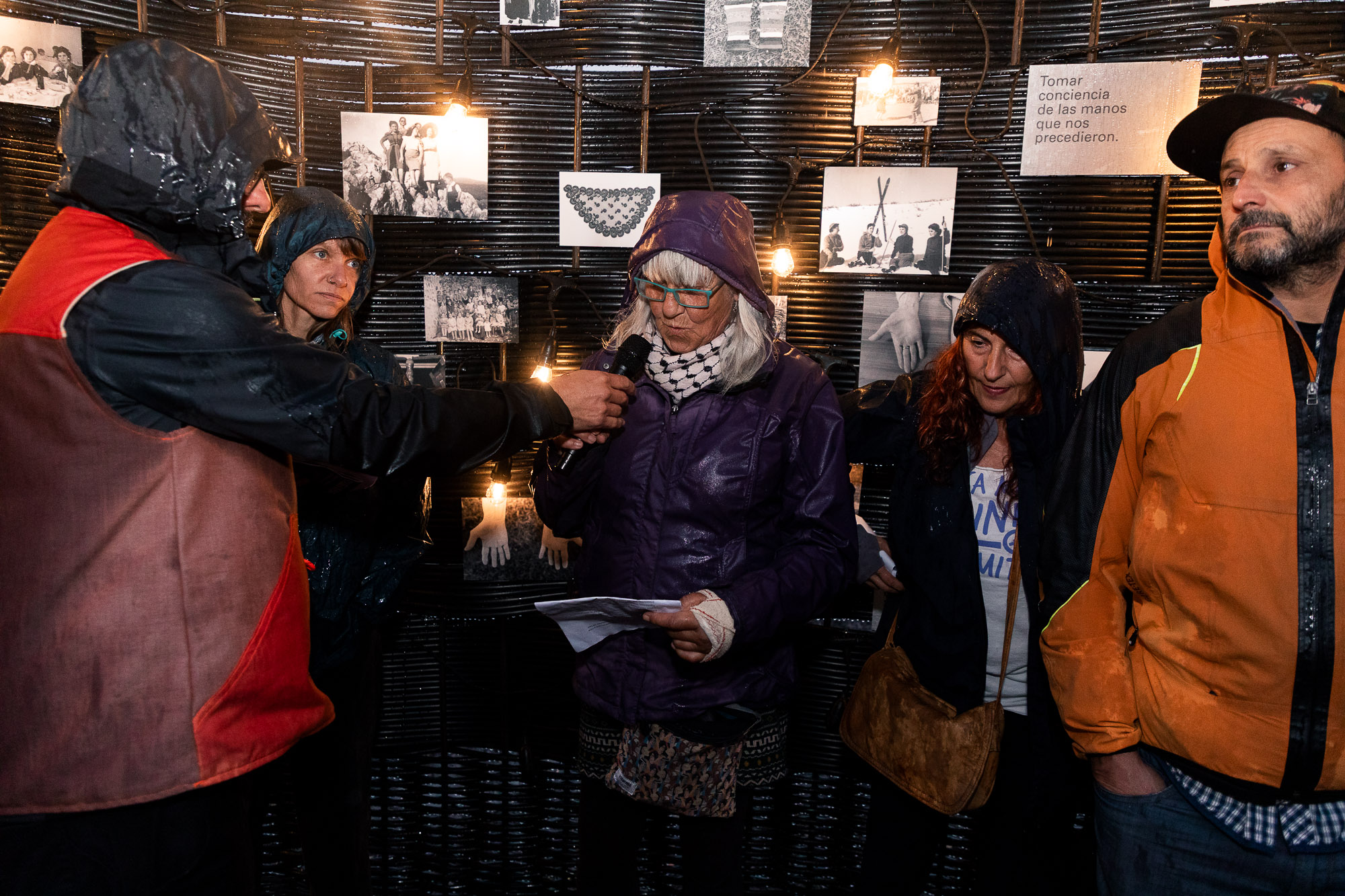
All photographs by Burru Comunicación.
Lo que falta
Reflexiones sobre la construcción de relatos tras la inauguración de Cuévana
Construir un relato, normalmente, significa negar otro. De esta manera se crean identidades en las que, por definición, alguien queda fuera del marco.
Recorriendo Barruelo de Santullán con las comitentes (y lo digo en femenino, porque tras más de un año y medio de trabajo en el territorio son ellas las que han tomado las riendas este grupo humano), es evidente la identidad que se ha querido imprimir durante años en el pueblo: la vida, dolores, trabajos y muerte del minero.
El mito del minero Hombre (con h mayúscula de Héroe) acapara cada esquina de este pueblo y de prácticamente cualquier lugar donde el trabajo masculino transformó el territorio con el empuje del progreso en los siglos XIX y XX. Pero, fuera de esa narración, quedan historias lideradas por mujeres, que no solo hablan de sustento y cuidado a esos trabajos, sino que nos cuentan de ellas y de sus formas de habitar el mundo a partir de sus posicionamientos políticos, de sus goces o de sus propios trabajos.
La herida (la secuela) que estas mujeres sienten que debe ser reparada en Barruelo de Santullán tiene que ver con esta falta. Con este vacío en los que las imágenes y palabras de las mujeres siguen estando negadas como parte fundamental de la historia y de la construcción contemporánea del lugar. Porque para ellas reparar la tierra no solo consiste en re-naturalizar, como ya se hiciera, la escombrera que existía a la entrada del pueblo y, de esta manera, suturar sin anestesia lo que la empresa que explotó la tierra y las instituciones hicieron a lo largo de decenios. Para este grupo, reparar la tierra tiene que ver, entre otras cosas, con tener en cuenta, con escuchar a las vecinas y así comenzar a poner la atención en ellas y en este territorio que ellas conocen, cuidan y disfrutan. Con aquello que es el hogar de todas.
Prácticamente desde que comenzamos “Secuelas energéticas”, nos ha atravesado una frase que dijo Geles, una de las comitentes, en una sesión de mediación: “Más de la mitad del pueblo está construido sobre el escombro de la mina”. A partir de estas palabras se han generado dinámicas en las que, de alguna manera, se vinculaba esa construcción del pueblo sobre el escombro con cómo se sentían ellas sustentando ciertos relatos y, a la vez, siendo ninguneadas como el escombro, como si fueran agentes de menos importancia que otros de Barruelo de Santullán.
Cuando las comitentes convocan a TxP (Jo Muñoz y Diego Peris) como artistas para plasmar sus deseos, problemas e inquietudes, ponemos sobre la mesa tanto lo que falta (como decía Jorge Oteiza, el hombre se define por lo que le falta) como el escombro. Ambas entendidas no como queja, sino como reivindicación.
Con estas ideas, Todo por la Praxis comenzaron a trabajar desde una escucha profunda, no sólo con las comitentes sino con el resto de vecinas que quisieron participar en esta fase. La idea de los artistas era dar voz a las que se les había negado, desde el escombro para ser visibles y escuchadas. Y desde donde continuar construyendo comunidad e historia.
Y, para hacerlo, teníamos que continuar juntándonos. Así, desde dos semanas antes a la inauguración, nos hemos encontrado en la escombrera para seguir reivindicando ese relato. Y lo hemos hecho tejiendo conversaciones dentro del espacio que Todo por la praxis ha creado. Un espacio que los artistas, las comitentes, el mediador y muchas vecinas/os de la zona hemos ido construyendo/tejiendo y que recuerda a los cuévanos. Esos cestos que usaban hace años las vecinas para recoger los desechos de carbón de la misma escombrera donde está ahora ubicada la pieza.
Jo Muñoz y Diego Peris (TxP) recordaban, el día de la inauguración, el libro de UrsulaK. Le Guin “La teoría de la bolsa de la ficción”. Y, pensando en esa referencia, creo que la pieza que han creado, Cuévana, es un relato como propone K. Le Guin: una bolsa que recoge relatos que sirven para reparar, no sólo, el relato negado a las mujeres, sino cualquiera de los que se han impuesto a estos territorios a los que únicamente se le ha extraído vida.
El día anterior a la inauguración, ya nerviosas por lo que de exposición pública tienen estos eventos, Paula (otra de las comitentes) nos escribía un mensaje: “Es como si los escombros se hubieran vuelto a erigir”. Y eso ha sucedido tanto a nivel visual, ya que la pieza creada por TxP recuerda en cierta manera a una de las dunas que existían en la escombrera antes de su renaturalización, como a nivel metafórico, porque estas mujeres que han participado se han erigido sobre los relatos de abandono y catastrofismo que la sociedad contemporánea les ha impuesto.
El día 3 de octubre fue la inauguración, y una fuerte tromba de agua nos acompañó mientras caminábamos hasta “Cuévana”. Ya empapados de agua hasta los huesos, allí nos empapamos de cariño, de emociones, de sonrisas, de palabras y de la sabiduría y la fuerza que destila este grupo de comitentes.